The Way Back to You
A note on getting lost, finding yourself, and making room to remember.
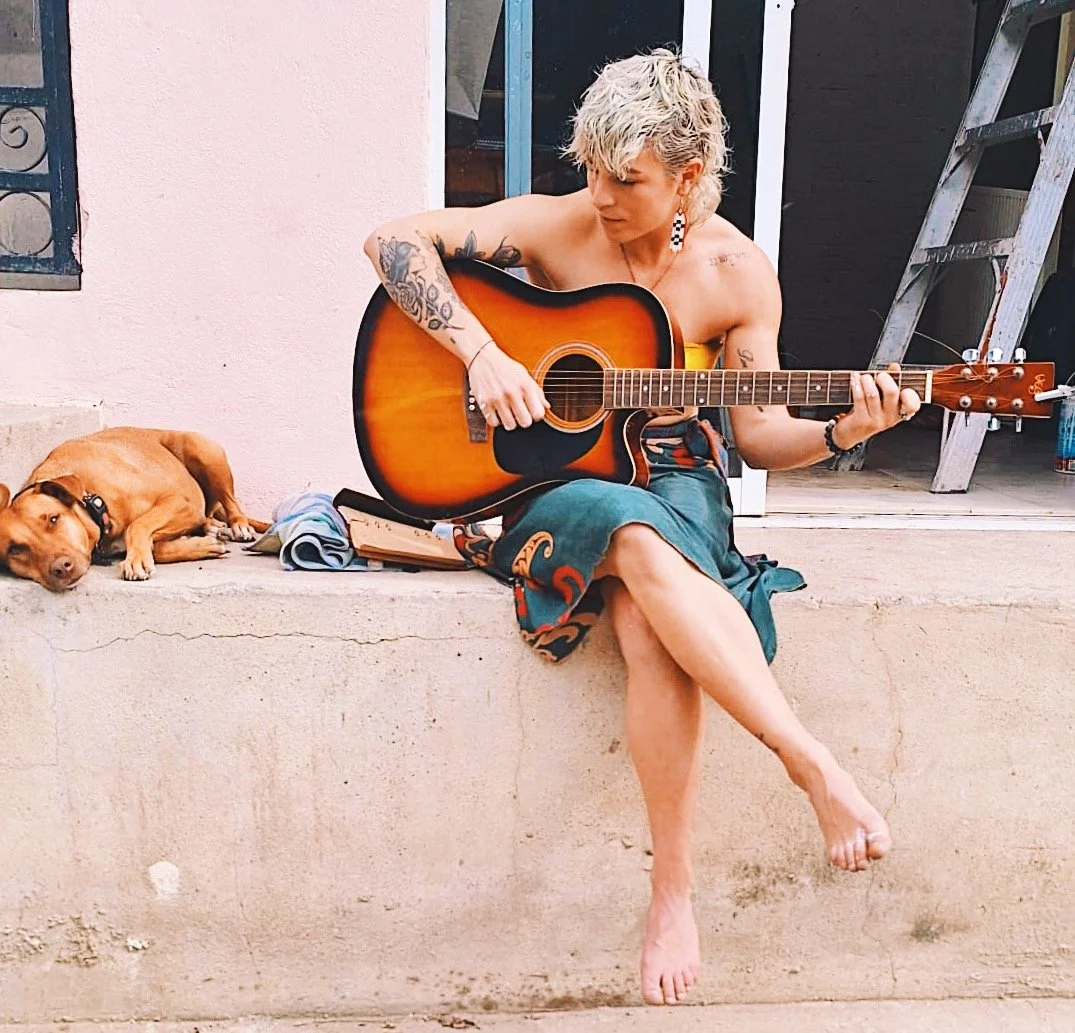
I have lost myself.
I have lost my direction, my sense of identity.
I haven’t known who I am, why I’m here, what I desire, or what I need.
I have lost my purpose, my passion, my path.
I have lost friends and partners and jobs and my fucking sunglasses 18x a day.
And the thing is… there are two things you can do in response to the change that loss brings: let go, or hold on.
It sucks when you come to a dead end on the way to your dreams. Does that mean you give up on the dream? Maybe.
But you get to decide next. You get to return to you, the path you know, and try another way.
While writing to process change, I learned: Nothing is ever lost.
Which led me to question my definitions of loss, pain, and suffering..
I asked, what is it that hurts? For me it was:
Dreams being shattered.
Disconnection.
The physical absence of someone.
A ‘part’ of you. The version you were in that dream.
Where does this pain come from?
What’s the way back to myself?
What does letting go look like in action?
Letting go of grief means making room to remember. Not remembering the past in cruel ways, ways that hurt you, but remembering with love. Putting love into painful memories.
In this process of remembering, I learned a mind technique that has you take a painful moment/memory, turn it black and white, and surround that frame by six more frames of vivid, bright, joyful memories. Visualizing this gives context and perspective to a moment that can be hard to shake. And sending compassion to ourselves in this moment can help us let go of our attachment to that story and keep going.
I also learned that the past can’t hurt you, only if you permit it.
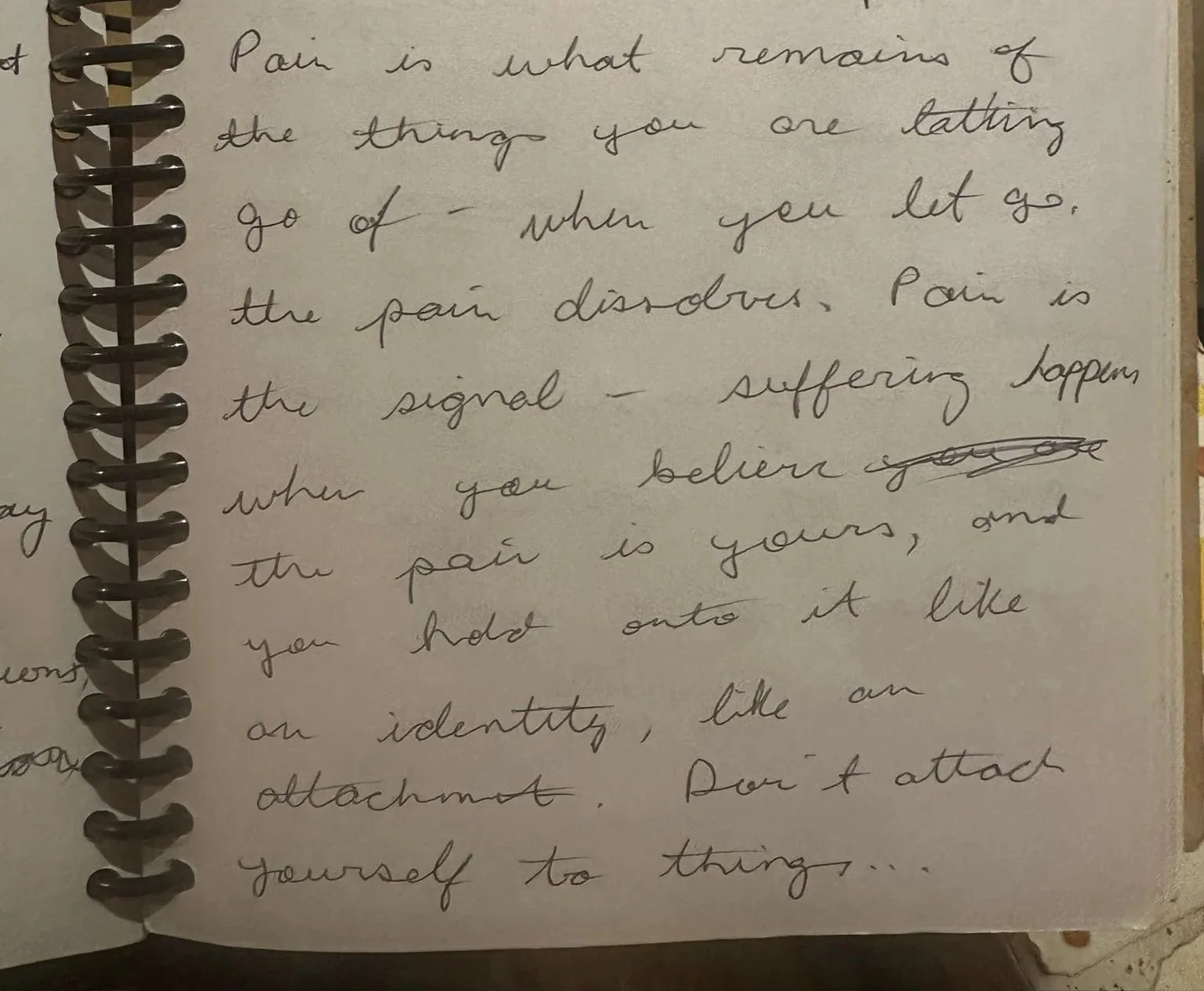
In the following journal entry I wrote:
Pain is what remains of the things you are letting go of. When you let go, the pain dissolves. Pain is the signal. Suffering happens when you believe the pain is yours and you hold onto it like an identity, like an attachment.
The more I understood where this pain was coming from, I could see that I was the one generating my own suffering around it… Yes, the moment happened, and it was a painful experience, but I was the one returning to the story in my mind that would hurt me every time I told or recalled it. So, I practiced sending love to those memories when they surfaced, letting go of the story, coming back to the present, and acknowledging that I am living in a different story now.
The Toltecs teach that pain comes when we confuse who we are with the stories we’ve lived. You are not just that story. You are the one who lived it, who loved deeply through all of its ups and downs, and who continues to love in the most honest way by choosing yourself.
On top of that, I learned that I get to decide if and how I carry that story forward. Will I choose to see it in a way that disempowers and victimizes me? Or can I find the perspective that leaves me feeling empowered?
Hilary McBride, a therapist I listen to, says “I wonder if we got better at feeling pain if we wouldn’t have to tell stories that weren’t true to make sense of pain.”
Western culture avoids pain at all costs… numbing it the moment it comes up. But life is painful, there is no denying that. And when we allow and breathe with pain, the pain transmutes… this is an act of love.
We can choose to see moments through love, or through the pain of our stories.
It’s a very specific skill to take in love, and we can decide that we’re not worthy of it - even if that’s not true - but in such a way that it actually stops us from taking in the kindness and compassion from ourselves or those around us…
So we need to be better at 2 things: looking for the love that is there, and taking it in. There is proof all over the place that you are loveable. And you are worthy of creating a new story.
You are not lost, you are deeply human.
Ready to write your way through it? Begin your PIVOT.