ATLAS: Minimalism, Ubuntu, & Living Outside The Lines
Learning to trust the journey when you have no map—and discovering the people who become your compass.
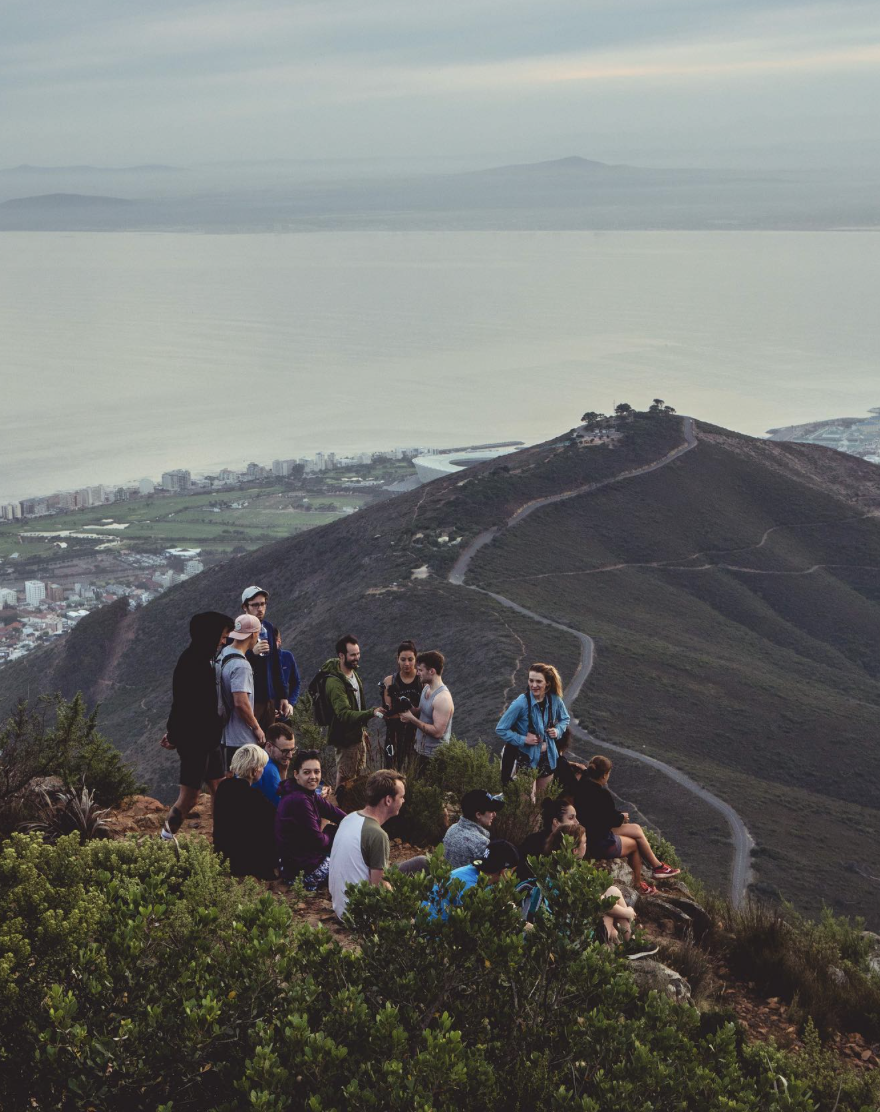
Overlooking Signal Hill from Lion’s Head, Cape Town, SA
“Whatever happens next is my new favourite thing.”
This was our group’s motto for the year ahead of us.
It was a total gamble. I had never done anything like it, and I could never expect where it would lead me.
A group of 40 strangers from around the world who, at the time, only had one thing in common: the choice to jump head first into the unknown and spend 1 year traveling to places we’d never been, with people we had never met.
We were from all over: Denmark, Switzerland, the USA, Canada, China, Mexico, the Netherlands, Sweden, Norway, Bulgaria, Israel, France, the UK.
And together we would travel to Africa, Europe, Asia, and Latin America, in a group called Atlas.
I didn’t know it at the time, but this very unlikely group of strangers would become family. When we first met, everybody was a nobody to each other. There was no reason for anyone to hide their true selves—for better or worse.
Many times, our differences and opposing perspectives led to conflict, misunderstandings, and a ridiculously difficult time splitting the bill. It definitely was not all love and rainbows.
I found myself accepting every moment for what it was, knowing that it was going to be a story to tell later.
I remember being lost in Kyoto after going on a disastrous karaoke date one evening. I had a few too many drinks, and was biking home. Of course, I would come crashing down on my bike and smash my cell phone. Shit. My main source for direction and way of orienting myself was glitching. I definitely didn’t know where I was, and I was starting to panic. There wasn’t a single soul on the streets at 3am, and so I called one of Atlas, Monica, and by the grace of god’s green earth, she answered.
“Tell me what you see,” she said, and I described a long stretch of trees by a park. “Okay, follow that, follow the line of trees. Now what do you see?”
Monica guided me all the way home without a single complaint about disturbing her sleep.
I got lost A LOT that year, because everywhere was new. Since we traveled as a group, I always left the directions to someone who knew better than me, and when it came time for me to navigate for myself, I found myself in many places I didn’t intend to end up.
One of those times, I ended up stumbling into a motorcycle bar in Cape Town where I met a local named Josh. By some miracle, we had a mutual connection in Canada and common ground. We were both raised in the Church and seemed to be equally as lost in our minds. I found that asking the questions together lifted the weight of the questions themselves.
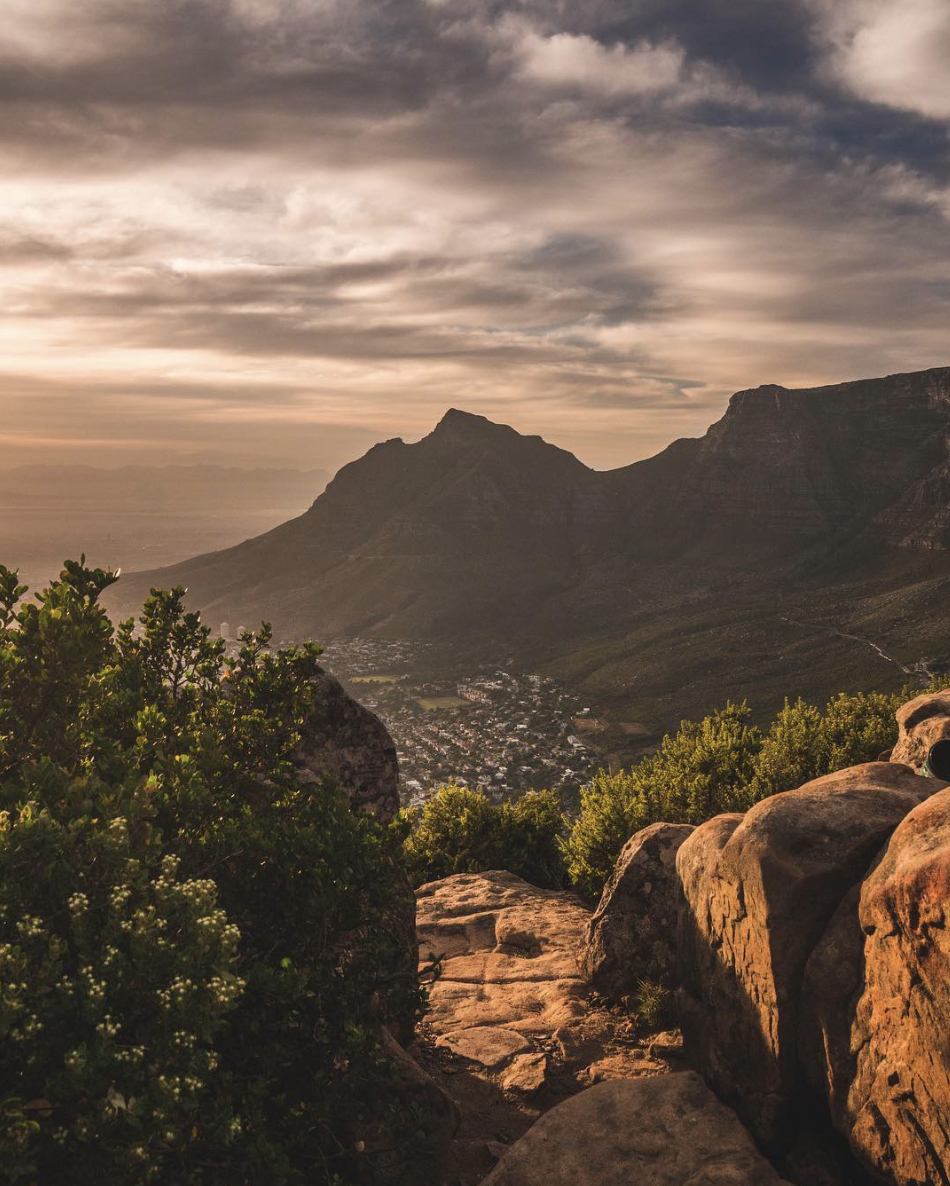
“We’ll never get this moment back,” he said.
Here we were, eating ice cream on a boulder in an African forest, sharing the odd coincidence. The dirt was red, and the trees sage green.
“Exactly as it is now anyway…”
“The temperature would be different, and the sun maybe in another position. We’d be eating a different flavour of ice cream, having a different conversation, coming from a different place.”
I felt what he said. The warmth from the sun on my shoulders, through my palms, pressed on top of the giant rock. I scanned around me in appreciation of where we were. What a beautiful moment. Two nearly strangers, finding each other in the same place, at the same time.
I don’t think it was a coincidence that the first person I met in Cape Town was deconstructing their world view the same way I had been, who had felt like an outsider in life the same way I had felt like an outsider.
How could I have traveled halfway around the world, not knowing a soul, and end up meeting someone who mirrored my journey so perfectly? I think one reason was music. We followed the music.
On my last night, we drove up to table mountain in the pouring rain. James Vincent McMorrow’s song Lost Angles played on the speaker:
And there's a reason that people move or people don't
People change or people stay the same completely
And it's such a, it's such a shortened life so why accumulate it only then to leave ?
Is it better to live your life in shallow water or risk failure drowning in the deep end?
I didn’t want to leave Cape Town. Although it was easy to think or say “I’ll visit again soon,” I’ll come back, I know it. But when I return, it will be very different.
I had never felt the emotion that was bubbling up. I was just beginning my trip, and I was excited to continue moving and exploring, but I also felt a longing to pause.
Don’t let fear control you,
don’t let fear control you,
don’t let fear control you…
In a previous year, a friend shared her new years resolution with me, which was “to be more present.”
I asked her what she meant by that... how do you be more present? I hadn’t really contemplated the idea of presence so much. To her, it meant being on her phone less.
She planted a seed, and after leaving Cape Town, that seed grew. On my way to my next destination, I listened to the podcast “Slowing Down” on the Ted Radio Hour, where writer Pico Iyer spoke about the illusion of constant activity.
“I was constantly happy in the most superficial kind of way. And so I left all that behind,” he stated about the realization that being busy and filling up every space in your life doesn’t necessarily lead to happiness or fulfillment; sometimes, it’s the absence of distractions that helps us find deeper meaning.
Because I had to downsize my life into a 35L backpack for my travels, it was perhaps the first time I really questioned what it was I truly needed. I fussed and researched so much about finding the best backpack, the best traveling pants, the best walking shoes. When in reality, I didn’t need anything special, and everything I needed I could find where I was going.
Filmmaker Joshua Fields Millburn in the documentary Minimalism says, “Minimalism isn’t about having less, it’s about making room for the things that matter more.”
What is it that matters? I questioned. What do I really need?
Over time, the list got smaller and smaller. Which is contrary to how I felt growing up. I always wanted so many things that I didn’t have, believing that everything I didn’t have would finally be the ‘thing’ that made me happy.
This constant chase for the next best thing—the next iPhone upgrade, a new and improved coffee maker, a bigger motorcycle, and other new toys, essentially—was the program my brain was set to. I was much more excited about the word ‘presents’ than ‘presence.’
Eventually, I had accumulated everything I was told would make me fulfilled, but I was deeply empty. I was winning the game of LIFE, swimming in a high paying salary, but the payoff was painfully shallow. I was oversaturated and overstimulated, and I longed for depth and meaning.
It wasn’t until changing my perspective, my place, and looking back in on it that I could see it for what it was. I was following someone else’s design for living. It’s like I was born with blinders on—only following a road laid down by others, letting someone else decide my worth, career trajectory, and pathways. Staying within the bounds I was told to live within. To colour outside the lines was met with fear. I followed the status quo, doing what everyone else was doing, convincing myself I was satisfied. It felt easier to keep buying and striving than to admit the feeling that something wasn’t quite right.
I became small within these limits because there was no reason to grow outside of them. Once I reached the milestone of working for a ‘great company’ with a ‘great salary,’ that seemed to be it. The only thing to think about was the next promotion. I didn’t feel like me, and to be honest, I hadn’t felt like me for a quite a long time. I didn’t know where I was or how to find me.
From the outside, it appeared my life sped up while traveling every month to a new place, meeting so many new people, and adjusting to new cultures, languages, and geographies. But in reality, it gave me the opportunity to slow my roll, step outside of my regular day to day, and consider what makes me feel alive.
In Minimalism, architect Frank Marcia says that “we’re living our life depending on the space we’ve got rather than creating our space to fit our lives.”
So I began to think about myself as the architect of my life, creating my world from the inside out, soaking up all I could about the various ways of living so I could design a life that made me feel alive.
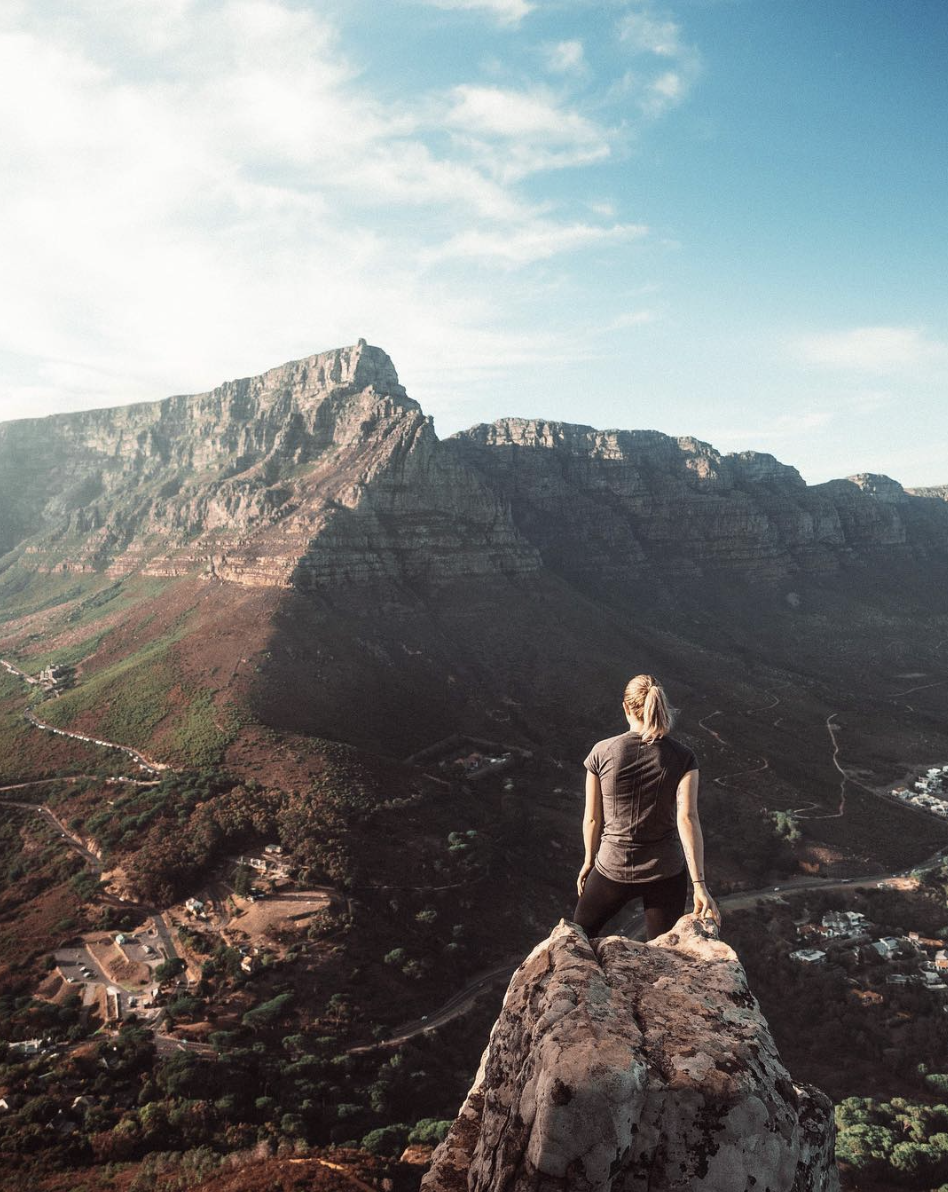
It was South Africa that made my heart feel wild again.
The land was filling me from the ground up. When I’m asked “where was your favourite place to travel?” I say Cape Town. For the spirit, the language, the people, the land, the ocean, the mountains, the music.
One day, we visited a township called Khayelitsha — a home to nearly one million people, 70% living in shanties. Khayelitsha came to exist as a final government attempt to enforce the Group Areas Act, an act that led to Cape Town becoming one of the most segregated cities in South Africa and Khayelitsha one of the top five slums in the world. On the way into the township, the disparity is obvious—huge mansions on the side of the hill and shacks on the other.
Khayelitsha is filled with a warm community known for entrepreneurialism, and there are many development programs being run by members within the community. For example Velokhaya, supported by Skeezo, uses cycling and BMX to empower young kids with life skills and opportunities. Another great one in CT is Waves For Change—a mental health organization that offers surf therapy.
In Khayelitsha we met Buntu Matole and Ayanda Cuba from ABCD Concepts, who taught us the meaning of the word “Ubuntu,” in the Xhosa language, which translates to “a person is a person through other people” or “I am because you are.” In a circle with them, they shared this part of their language through sound. That’s when Buntu turned to us and shared more about the meaning of the word, how can one of us be happy when the rest of us are sad?
I was coming from such an individual society, thinking so much about my own—what is mine, and what belonged to me, that I didn’t often think about taking responsibility for the well-being of others. And that caring for someone is an extension of how you care for your self. Now I have also learned that you need to first extend care and love to yourself, have compassion for yourself, acceptance, and love… because without first receiving it from yourself, the external display of it becomes people pleasing.
Alan Watts encouraged people to understand the “self” not as a fixed entity but as a dynamic process. With this shift in understanding, it is simpler to dissolve the rigid boundaries between “self” and “other.”
We are all in process.
There is no such thing as being self-made, no one gets anywhere without the help of others, and without influencing the lives of others along the way. Every action we take influences another, as does inaction. To not decide is also a choice.
And once you have the awareness that we sustain and influence each other with every choice, I believe we have the responsibility to look out for each other while we look out for ourselves.
Ubuntu affirms there is a need for understanding not vengeance, compassion not victimization, and humanity towards others.
Caring for others is not a separate act from caring for ourselves; it is a natural consequence of understanding our place in the larger whole. There is a universal bond of sharing that connects all of humanity.
And although our bodies are separate, the roots beneath our feet are deeply intertwined.
I learned that lesson over and over again on my travels.
There is a message out there about how divided we are as nations, and how great our differences are—but the more people I met and places I traveled, the more I came to the same conclusion: We are much more alike than we are different. And there is truly so much more beauty, more peace, and more harmony in the world than there is terror, conflict, and war.
It’s all a matter of what you choose to pay attention to.